
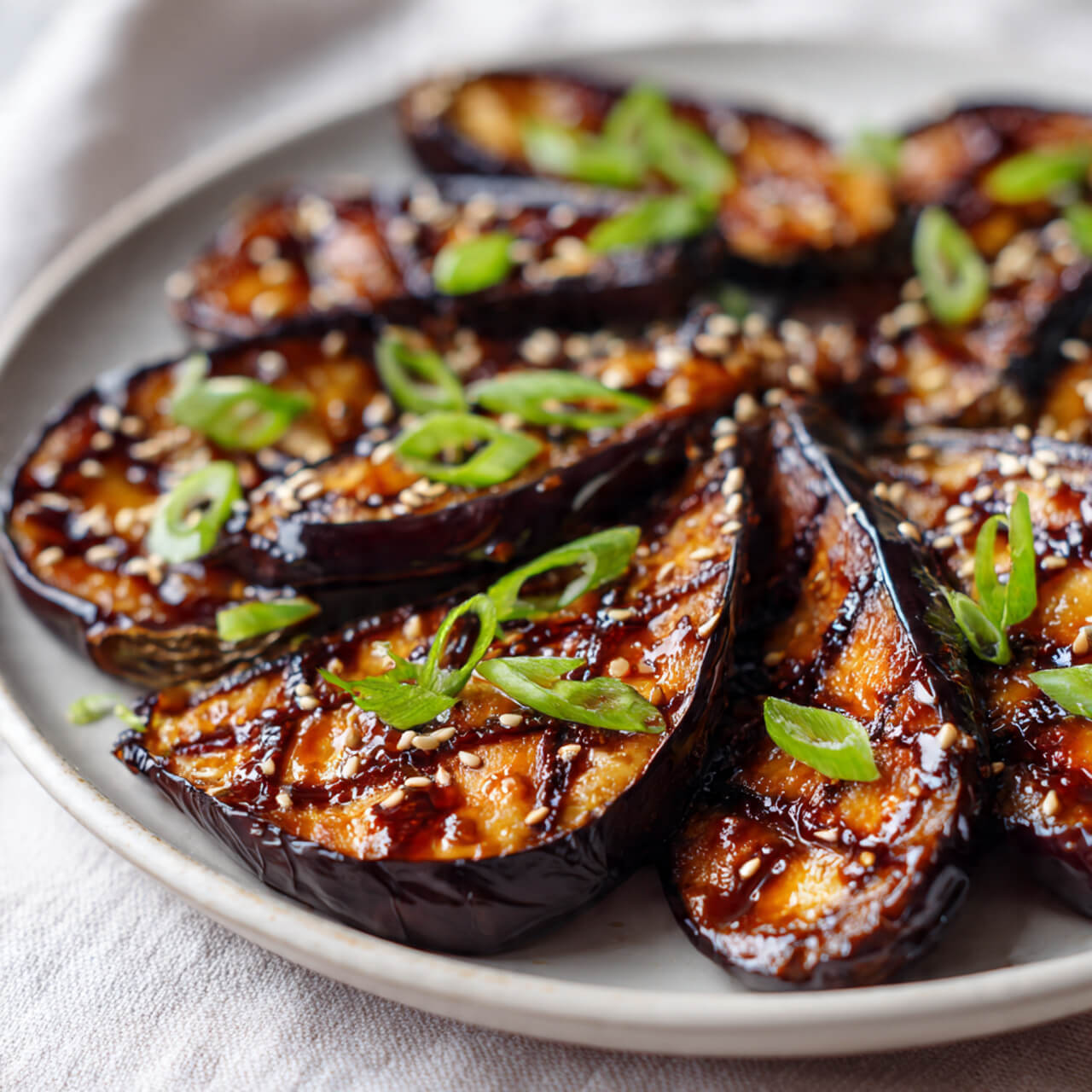
I didn’t grow up loving eggplant. I wanted to. I tried. But most of the time, it showed up either soggy, bitter, or drowning in oil like it had given up on life.
Then one evening—mostly out of boredom and an unopened tub of miso paste—I tossed some eggplant into the air fryer, brushed on a quick miso glaze, and hoped for the best. What came out shocked me. Crispy edges, soft creamy centers, and this deep, savory-sweet flavor that made me eat half the batch straight off the tray. Standing up. No plate.
If you’ve ever felt unsure about eggplant, this air fryer miso glazed eggplant might change your mind. It definitely changed mine.
Why Eggplant + Miso Is a Perfect Match
Eggplant needs help. Let’s be honest. On its own, it tastes… polite. Miso, on the other hand, brings boldness.
Top recipes all lean into the same idea:
- Eggplant absorbs flavor easily
- Miso adds umami depth
- Sweeteners balance bitterness
- High heat creates texture
When you glaze eggplant with miso and cook it hot, the outside caramelizes while the inside turns silky. Ever wondered why this combo tastes almost “meaty” even though it’s fully plant-based? That’s umami doing its thing.
Why the Air Fryer Works Better Than the Oven (IMO)
I tested this both ways. The oven version worked fine. The air fryer version worked better.
Here’s why:
- Faster cooking = less moisture loss
- Hot circulating air crisps edges evenly
- Smaller space caramelizes glaze faster
I use the COSORI 6-Quart Air Fryer because it handles vegetables evenly without crowding.
FYI, you don’t need a fancy model, but consistent heat matters here.
Choosing the Right Eggplant (This Actually Matters)
Not all eggplants behave the same.
Best Options
- Japanese eggplant – thinner skin, sweeter, cooks faster
- Chinese eggplant – similar texture, less bitterness
Regular Globe Eggplant?
It works, but:
- Peel some skin
- Cut into smaller pieces
- Salt lightly to remove bitterness
Top recipes always mention this for a reason. I learned it the soggy way.
Let’s Talk Miso (Because Not All Miso Tastes the Same)
I keep white miso (shiro miso) in my fridge at all times. It’s mild, slightly sweet, and perfect for glazing.
I like Hikari Organic White Miso for consistency.
Red miso tastes stronger and saltier. It can overpower eggplant fast. White miso keeps things balanced.
Ingredients (Nothing Fancy, Just Smart)
For the Eggplant
- 2 medium Japanese eggplants
- 1 tablespoon olive oil
For the Miso Glaze
- 2 tablespoons white miso paste
- 1 tablespoon maple syrup or honey
- 1 tablespoon soy sauce or tamari
- 1 teaspoon rice vinegar
- 1 teaspoon sesame oil
- 1 small garlic clove, grated
Optional garnish:
- Sesame seeds
- Green onions
- Chili crisp (if you like heat)
Step-by-Step: How I Make It Without Overthinking
Step 1: Prep the Eggplant
I slice the eggplant lengthwise into thick planks or large chunks. I keep them similar in size so they cook evenly.
I toss them with olive oil and a pinch of salt. Nothing more.
Step 2: Make the Miso Glaze
I whisk miso, maple syrup, soy sauce, rice vinegar, sesame oil, and garlic until smooth.
If it feels too thick, I add 1 teaspoon water. The glaze should brush easily, not drip everywhere.
Step 3: Air Fry (Round One)
I place eggplant in the air fryer basket in a single layer.
I cook at 380°F for 8 minutes, flipping once. This softens the inside before glazing.
Step 4: Glaze and Finish
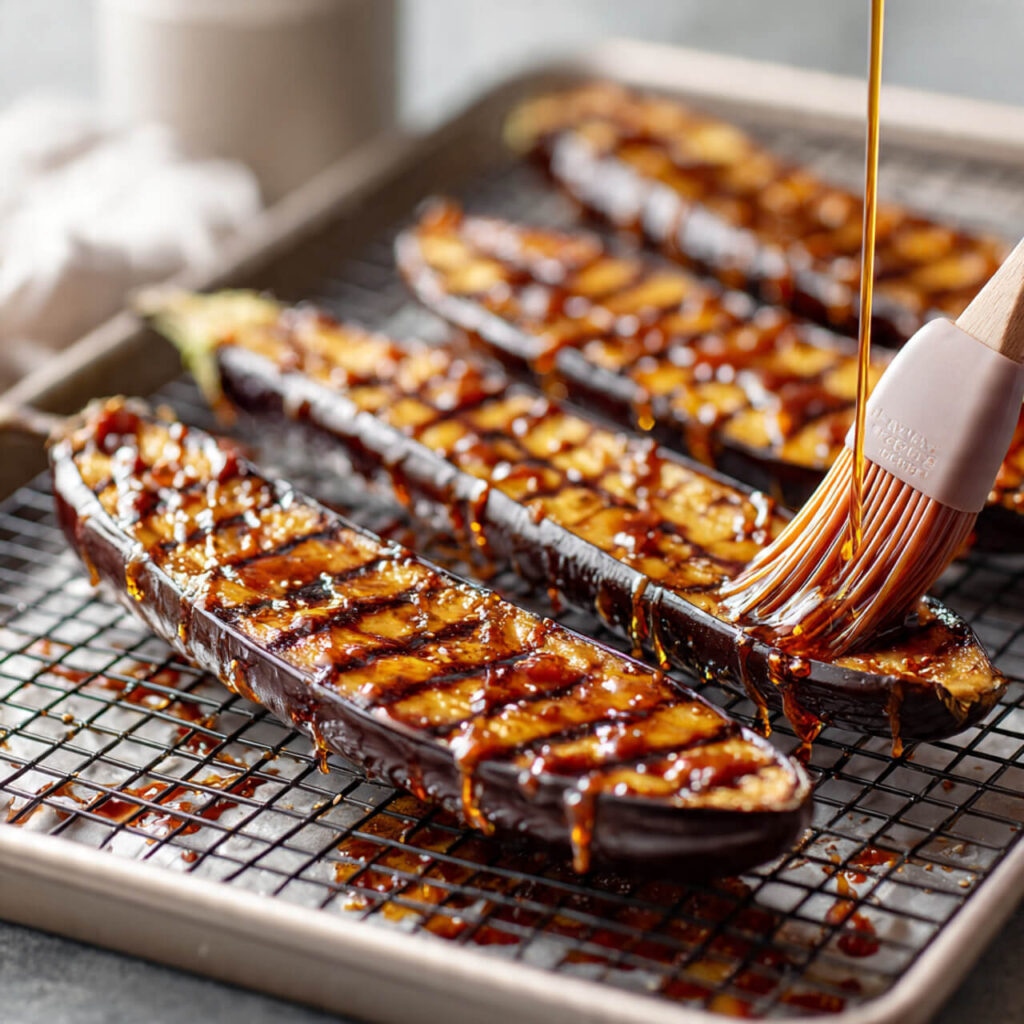
I brush the miso glaze generously over the eggplant.
Then I air fry again at 400°F for 4–6 minutes, watching closely. The glaze bubbles and caramelizes fast.
Ever noticed how miso goes from “meh” to “wow” in about 30 seconds? Don’t walk away.
Texture Check: What You’re Looking For
Perfect miso glazed eggplant looks like this:
- Crispy, browned edges
- Soft, creamy center
- Sticky, glossy glaze
If it looks dry, brush more glaze. If it darkens too fast, pull it early. Trust your eyes.
Tips I Learned After Making This Too Many Times
- Don’t overcrowd the basket
- Glaze near the end to prevent burning
- Use parchment with holes if your fryer runs hot
- Taste your miso first (salt levels vary)
Top recipes emphasize glaze timing, and now I understand why.
Flavor Variations I Actually Use
Want It Spicy?
- Add chili crisp or gochujang
- Sprinkle red pepper flakes after cooking
Want It Sweeter?
- Add extra maple syrup
- Finish with a drizzle of honey
Want Protein?
- Serve over rice with tofu
- Add edamame or chickpeas
This eggplant plays well with others.
What I Serve It With
I treat this like a main or a side, depending on mood.
Great Pairings
- Steamed jasmine rice
- Soba noodles
- Simple cucumber salad
- Fried eggs (don’t knock it)
Leftovers? Chop and toss into grain bowls. Still good the next day.
Storage & Reheating
I store leftovers in an airtight glass container for up to 3 days.
To reheat:
- Air fryer: 350°F for 3–4 minutes
- Skillet: medium heat, no oil
Microwave works, but you’ll lose crispness. Still tasty though.
Why This Recipe Works When Others Don’t
Top-ranking recipes all focus on:
- High heat
- Balanced glaze
- Minimal ingredients
- Texture contrast
This version keeps all of that without overcomplicating things. And honestly? Eggplant doesn’t need much—just respect and a good glaze.
Ingredients
Method
- Slice eggplant evenly and toss with olive oil and salt.
- Air fry at 380°F for 8 minutes, flipping once.
- Whisk all glaze ingredients until smooth.
- Brush glaze over eggplant.
- Air fry at 400°F for 4–6 minutes until caramelized.
- Garnish and serve immediately.
Notes
- Use white miso for balanced flavor
- Glaze late to prevent burning
- Adjust sweetness to taste
- Best served fresh for crisp edges