

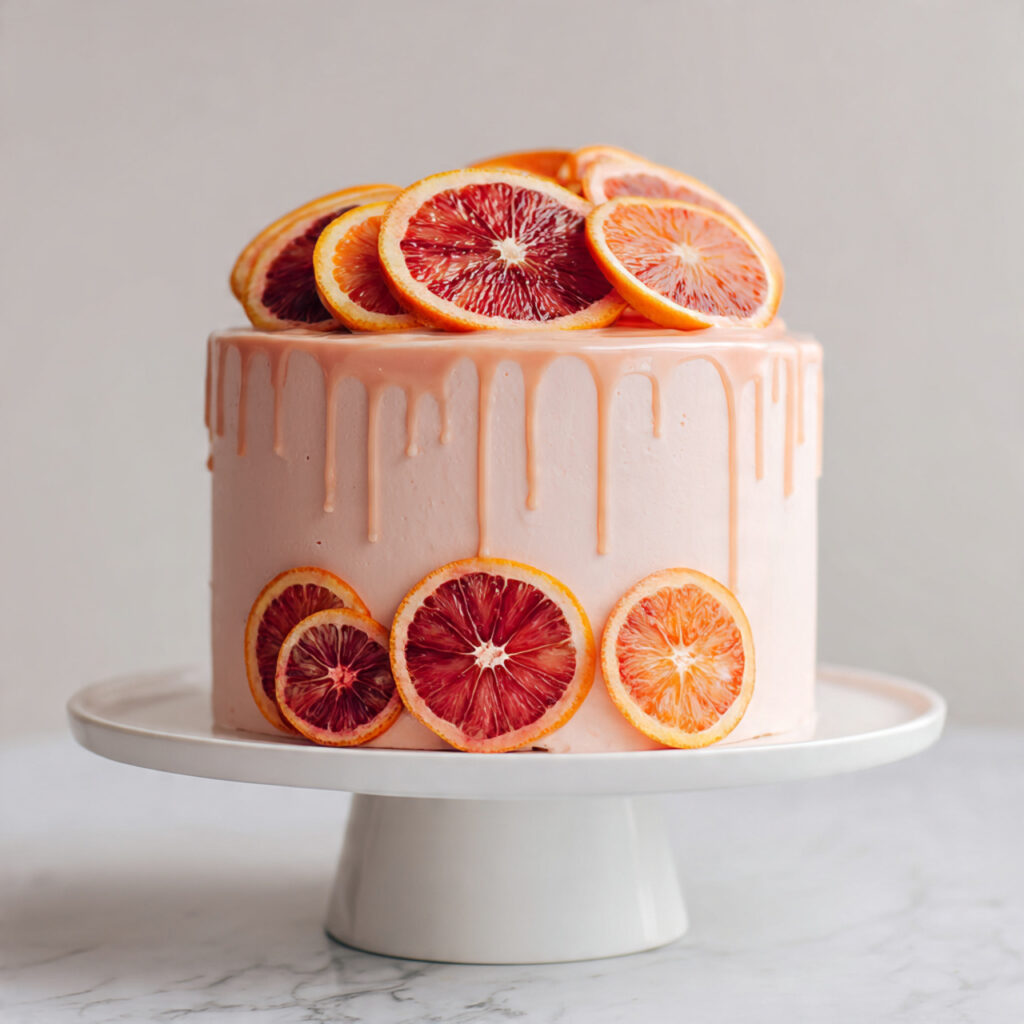
I’ll just say it upfront: blood orange cake has personality. It’s not your shy lemon loaf or predictable vanilla sponge. This cake walks into the room wearing a deep pink blush, smells faintly floral, and somehow tastes bright, cozy, and a little dramatic all at once. The first time I baked it, I expected “nice citrus cake.” What I got instead was a dessert that made people stop mid-bite and say, “Wait… what is this?”
If you’ve ever stared at blood oranges in the grocery store—admired them, maybe snapped a photo, then walked away unsure what to do with them—this recipe is your moment. I’ve baked this cake more times than I can count, tweaked it across seasons, and served it to people who “don’t really like citrus desserts.” They always ask for seconds. Always.
So yeah, pull up a chair. Let’s talk blood orange cake, the kind you bake when you want something simple but special, impressive but not fussy.
Why Blood Orange Cake Feels Different (In the Best Way)
Blood oranges aren’t just oranges with a cool color. They bring a slightly berry-like flavor, less sharp than lemon, deeper than navel oranges. IMO, that’s why they shine in cakes.
Here’s what makes them perfect for baking:
- Balanced acidity that doesn’t overwhelm
- Natural sweetness with subtle bitterness
- Gorgeous pink-red juice that tints the crumb
Ever wondered why blood orange cakes feel more “bakery-style” than basic citrus cakes? That complexity does the heavy lifting.
When Blood Oranges Are in Season (And What to Do If They’re Not)
In the U.S., blood oranges usually show up from December through April. I stock up during peak season and bake this cake nonstop.
If you can’t find them:
- Use Cara Cara oranges for sweetness
- Add 1–2 teaspoons blood orange extract for flavor depth
- Accept that the color won’t be as dramatic (it happens)
The flavor still works. The cake still slaps. No stress.
Ingredients That Actually Matter Here
This cake looks simple, but a few choices make or break it.
Core Ingredients
- Fresh blood oranges (zest + juice)
- All-purpose flour
- Eggs (room temp—this matters)
- Granulated sugar
- Neutral oil (I prefer avocado oil)
- Baking powder
- Salt
- Vanilla extract
Optional but Worth It
- Greek yogurt or sour cream (moisture insurance)
- Powdered sugar (for glaze or dusting)
Amazon Ingredient Tool I Use Constantly:
Microplane Premium Zester – sharp enough to get zest without bitterness.
I’ve owned mine forever, and it still performs like day one.
The Mixing Method I Swear By
I don’t cream butter for this cake. Oil keeps it moist for days, which matters if you bake ahead (or snack slowly, like me).
Why Oil Works Better Than Butter Here
- Keeps crumb tender even when cold
- Lets citrus flavor shine
- Zero waiting for butter to soften
Ever had a citrus cake dry out overnight? Oil fixes that problem.
Step-by-Step: How I Make My Blood Orange Cake
1. Prep the Pan and Oven
- Preheat oven to 350°F
- Grease a 9-inch round or loaf pan
- Line bottom with parchment (trust me)
2. Zest First, Always
Zest your blood oranges before juicing them. You’ll need about:
- 2 tablespoons zest
- ½ cup fresh juice
The smell alone will convince you this cake is worth it.
3. Mix the Wet Ingredients
In a large bowl, whisk:
- Sugar
- Eggs
- Oil
- Yogurt or sour cream
- Vanilla
- Blood orange zest and juice
Whisk until smooth and glossy.
4. Add the Dry Ingredients
In a separate bowl, mix:
- Flour
- Baking powder
- Salt
Fold gently into the wet mix. Don’t overthink it. Overmixing = dense cake.
5. Bake Until Just Right
Pour batter into pan and bake:
- 45–55 minutes for loaf
- 35–40 minutes for round pan
A toothpick should come out with a few moist crumbs, not clean.
Let’s Talk About the Glaze (Optional but Fantastic)
I sometimes skip glaze and dust with powdered sugar. Other days, I go all in.
Simple Blood Orange Glaze
- 1 cup powdered sugar
- 2–3 tablespoons blood orange juice
Whisk until thick but pourable. Drizzle generously.
Want extra drama? Add a pinch of salt. Sweet + salty always wins.
Texture, Flavor, and Why This Cake Gets Better Overnight
This cake improves after resting. The crumb tightens slightly, the citrus mellows, and the flavor deepens.
Day 1: bright and punchy
Day 2: balanced and bakery-level
Day 3: still moist (if it lasts that long)
FYI, I’ve eaten it straight from the fridge and loved it. No shame 🙂
Tools That Make This Cake Easier (And Why I Actually Use Them)
I don’t push gadgets unless they earn counter space.
Pan I Trust
USA Pan Loaf Pan – even browning, zero sticking.
Juicer That Saves My Hands
Zulay Metal Citrus Juicer – sturdy and mess-free.
Blood oranges aren’t huge, but they can fight back. This helps.
Common Mistakes I’ve Made (So You Don’t Have To)
- Skipping zest = flat flavor
- Using bottled juice = weird aftertaste
- Overbaking = dry edges
Citrus cakes need attention near the end. Check early.
How This Compares to Other Citrus Cakes
I’ve baked lemon loaf, orange pound cake, grapefruit upside-down cake—you name it.
Blood orange cake wins because:
- Less sharp than lemon
- More complex than orange
- More forgiving than grapefruit
It’s the “crowd-pleaser with personality” option.
Serving Ideas That Feel Fancy Without Effort
- Slice with whipped cream
- Add fresh berries
- Serve with coffee or tea
Ever brought this to brunch? People assume it’s from a bakery.
Ingredients
Method
- Preheat oven to 350°F and prep pan.
- Whisk eggs and sugar until pale.
- Add oil, yogurt, vanilla, juice, and zest.
- Mix dry ingredients separately.
- Fold dry into wet until just combined.
- Pour into pan and bake until toothpick shows moist crumbs.
- Cool completely before glazing.
Notes
- Use fresh juice only
- Don’t overbake
- Flavor improves overnight
- Store covered at room temp 2 days